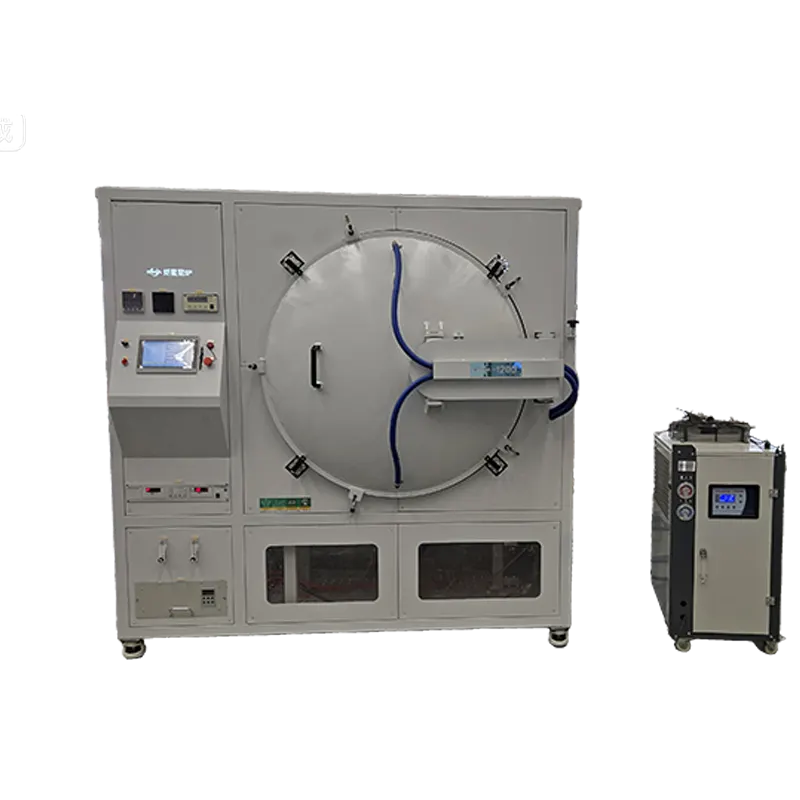
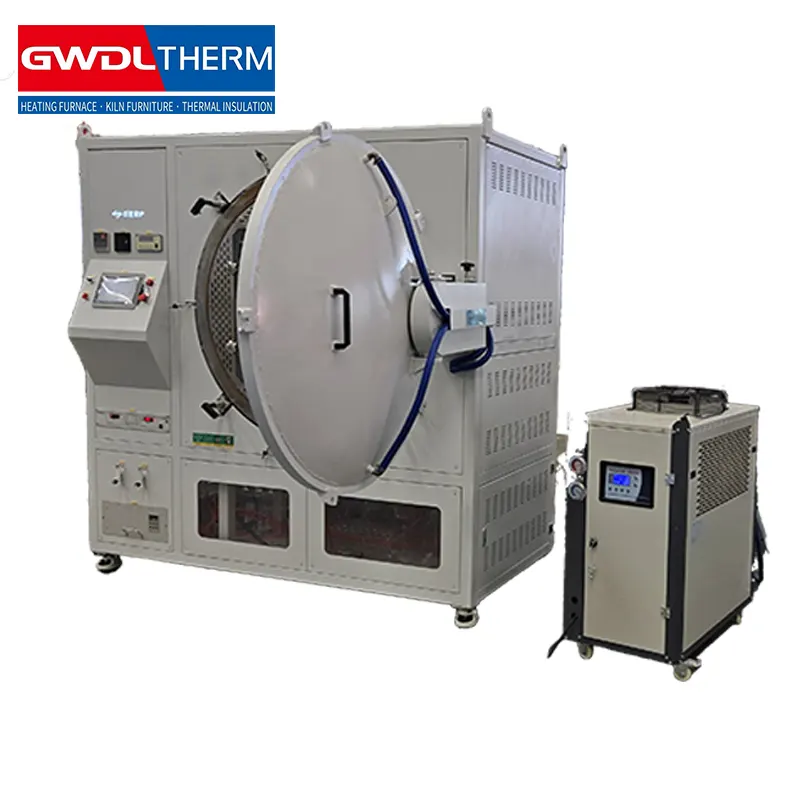
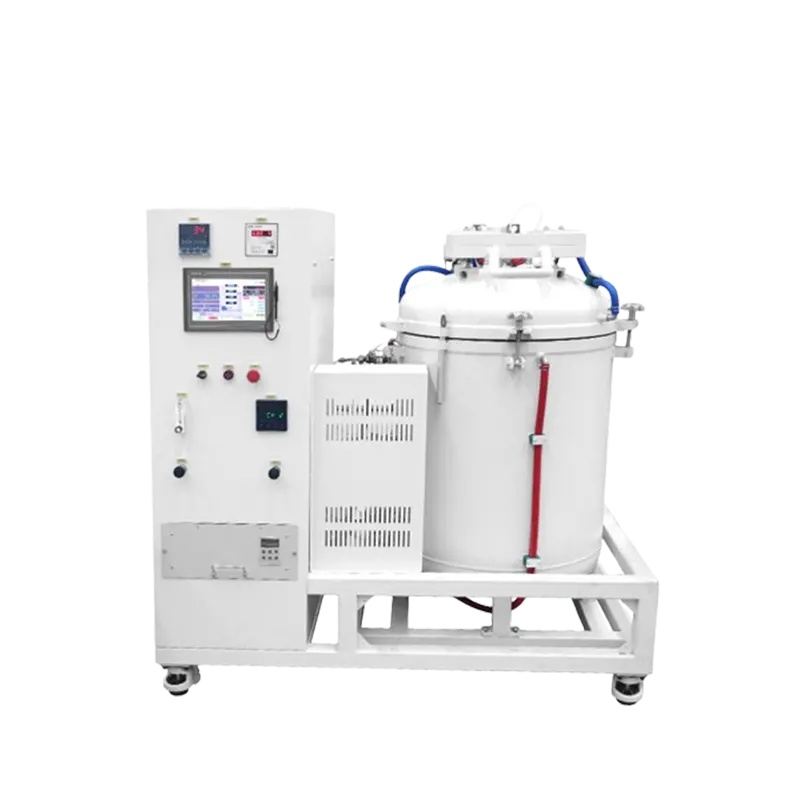
1200°C Vertical Vacuum Atmosphere Sintering Electric Furnace System
Designed for high-temperature sintering under vacuum or controlled atmosphere, this vertical furnace ensures uniform heating, precise temperature control, and stable processing.
1200°C vertical vacuum atmosphere sintering furnace enables precise temperature control, stable vacuum/gas environments, and efficient high-temperature material processing.
Product Features
Vacuum furnace main unit
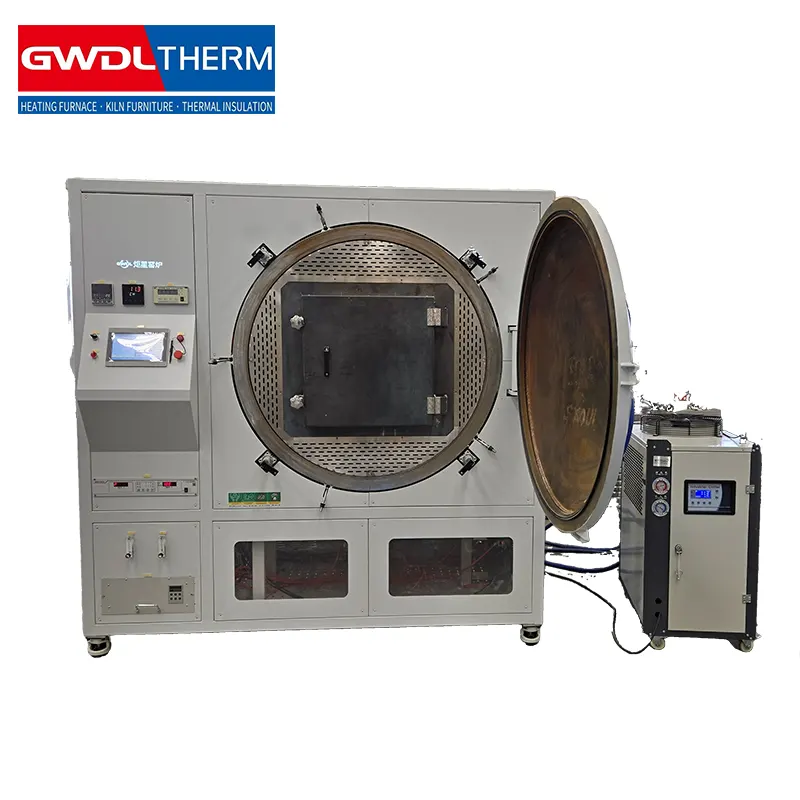
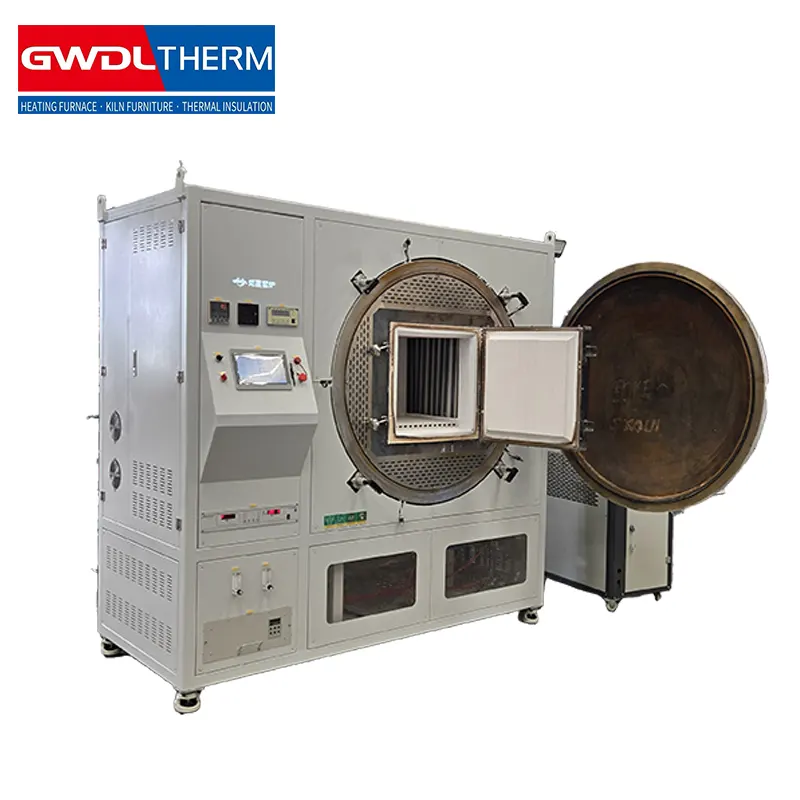
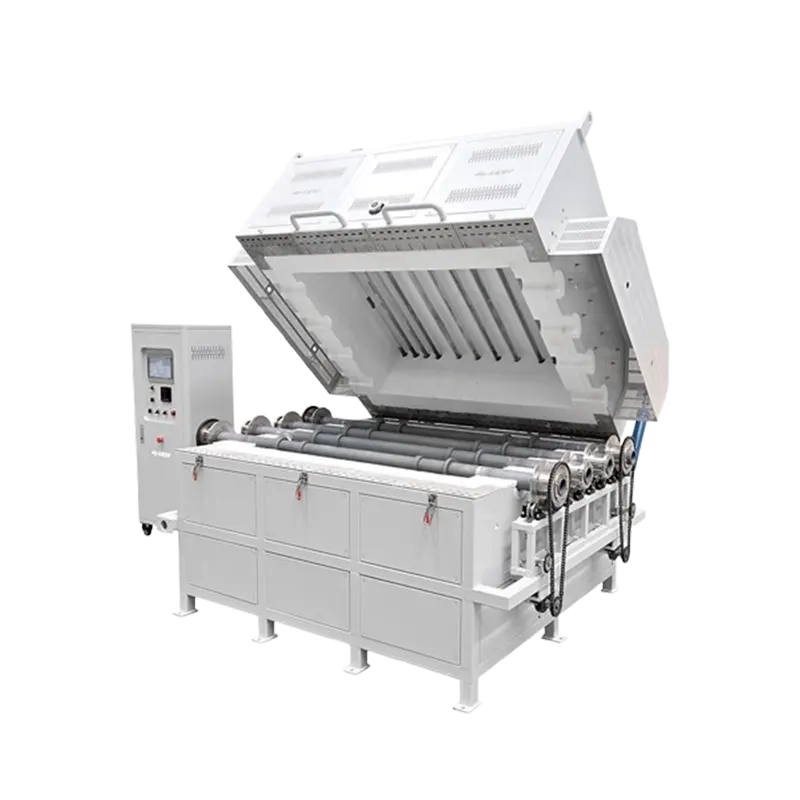
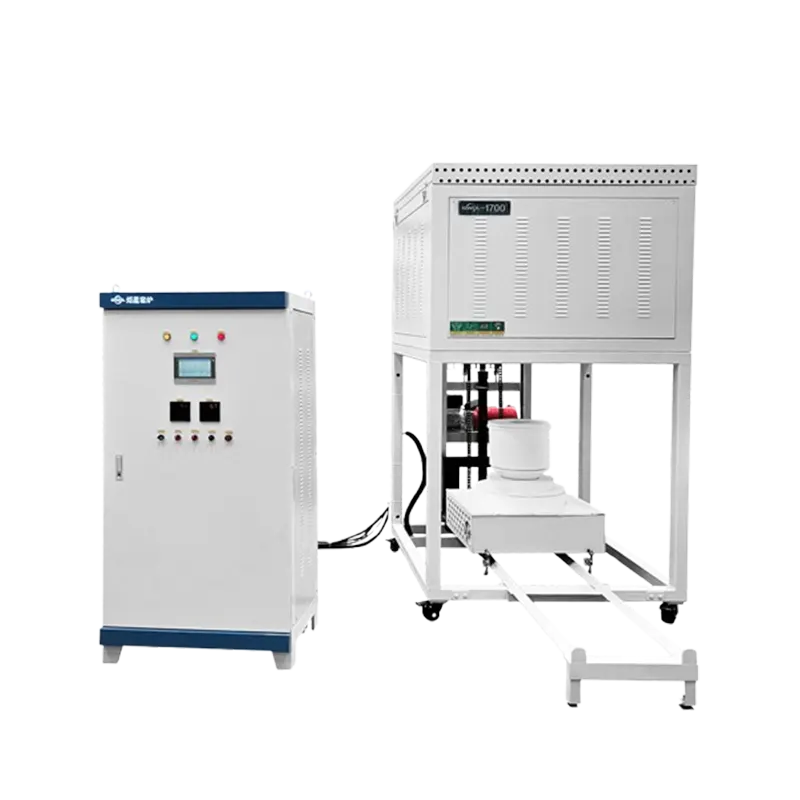
The vacuum furnace adopts a vertical single-chamber structural design, providing a compact, stable, and efficient configuration for high-temperature vacuum and atmosphere processing. The main unit is composed of the furnace body, furnace door, furnace frame, heating chamber, and other integrated structural components, ensuring strong mechanical stability and reliable long-term operation.
The vertical layout optimizes space utilization while allowing convenient loading and unloading of materials. This design also improves heat distribution efficiency inside the chamber, ensuring more uniform temperature fields during sintering, heat treatment, and experimental processes. The single-chamber structure reduces heat loss and enhances vacuum sealing performance, contributing to higher energy efficiency and process stability.
The furnace body is engineered with high-strength materials to withstand repeated thermal cycles and maintain structural integrity under high-temperature and vacuum conditions. The furnace door is designed for secure sealing, ensuring stable atmosphere control during operation. The integrated furnace frame provides strong support for the entire system, enhancing safety and durability in continuous use.
The heating chamber is designed to deliver uniform thermal performance, supporting precise temperature control and stable sintering conditions for advanced materials. Its configuration allows compatibility with vacuum, inert gas, and controlled atmosphere environments, making it suitable for a wide range of high-temperature applications.
Overall, the vertical single-chamber design provides excellent stability, energy efficiency, and operational convenience, making the system ideal for laboratory research, material development, ceramic processing, and industrial high-temperature vacuum sintering applications.
Furnace body and furnace door
The vacuum furnace main body is mounted on a robust support frame, providing strong structural stability and reliable operation under high-temperature and vacuum conditions. Both the furnace body and furnace door adopt a double-walled water-cooled structure, effectively reducing surface temperature, improving operational safety, and ensuring long-term thermal stability during continuous use.
The inner walls of the furnace body and door are constructed from high-quality welded carbon steel, while the outer shell acts as a protective layer, enhancing mechanical strength and overall durability. The furnace body undergoes precision CNC machining followed by a comprehensive surface treatment process, including polishing, grinding, pickling, phosphating, powder coating, and high-temperature baking. The dual-color finish not only enhances corrosion resistance but also provides a clean, modern, and visually refined appearance.
The system is designed with excellent resistance to oxidation, acids, alkalis, corrosion, and high temperatures, ensuring stable performance in harsh industrial environments. The smooth surface also facilitates easy cleaning and maintenance, reducing downtime and improving operational efficiency.
The furnace chamber is constructed using steel plates with a thickness of 6–20 mm and double-sided welding technology, enabling it to withstand positive pressure up to 0.1 MPa. This ensures structural integrity and safe operation under demanding process conditions. Additionally, the furnace shell temperature is maintained at ≤45°C during continuous operation, improving user safety and working environment comfort.
The furnace is equipped with multiple standardized port configurations for flexible process integration. These include a ½” NPT female port at the center of the top cover and furnace door for expansion or instrumentation, two ½” NPT ports on the upper furnace body for inert gas inlet, and dedicated ½” NPT ports at the top and bottom of the heating chamber for thermocouple installation. This modular design allows easy system customization, enabling precise atmosphere control and accurate temperature monitoring for advanced vacuum and thermal processing applications.
Technical Specifications
Specification
parameter
Furnace size
500×500×500 mm
vacuum degree
6.67×10⁻³ Pa
Pressure rise rate (cold state in an empty furnace)
≤0.66 Pa/h (calculated after 24 hours of pressure holding)
Evacuation rate (1×10⁻³Pa, under ambient temperature empty furnace, timing with main valve open)
≤120 min
Maximum design temperature
1200℃
Long-term operating temperature
1150℃
heating rate
≤10℃/min (non-linear)
Temperature uniformity
≤±5℃ (Nine-point test under no-load at 1200℃)
Temperature control accuracy
± 1℃
Can open atmosphere
Nitrogen, argon, carbon monoxide, oxygen, hydrogen, etc.
Oxygen content analyzer
Real-time monitoring of residual oxygen content inside the furnace ensures a stable low-oxygen environment, thereby preventing material oxidation and performance degradation.
Heating chamber, heating elements, and insulation components
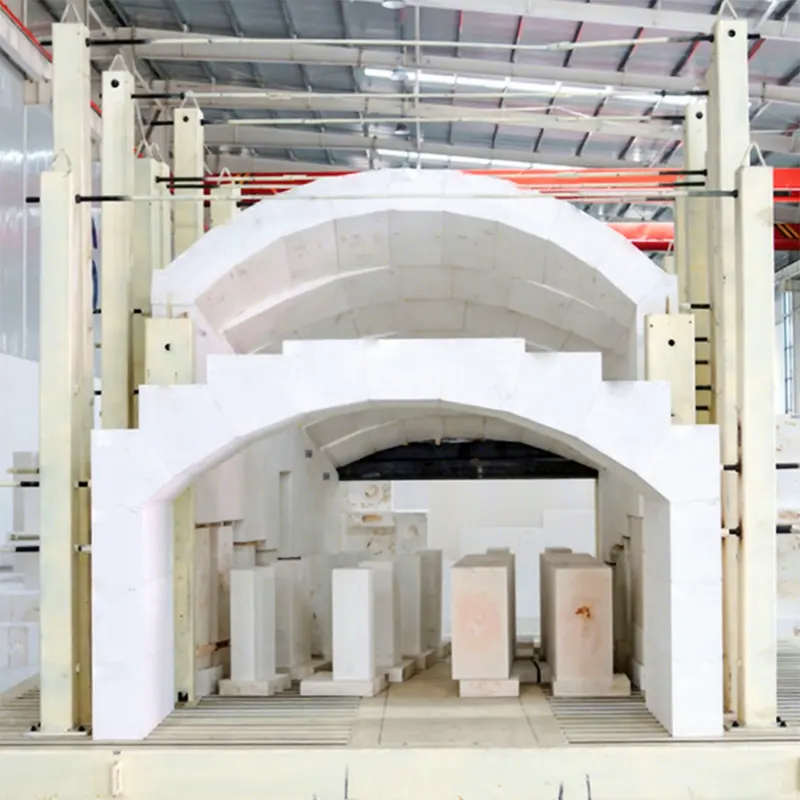
The furnace adopts a high-performance insulation and heating structure designed for excellent thermal efficiency, durability, and stable high-temperature operation. The furnace lining is constructed using vacuum-formed lightweight alumina material, ensuring low thermal mass, high strength, and superior insulation performance. This advanced structure significantly reduces heat loss while maintaining a stable internal temperature environment, improving overall energy efficiency.
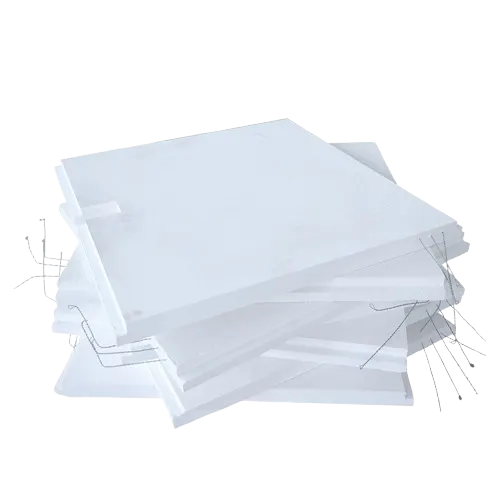
For critical load-bearing and impact-prone areas such as the furnace opening and bottom, lightweight hollow-sphere alumina boards are applied. These reinforced materials enhance mechanical strength while maintaining excellent thermal resistance, ensuring long-term reliability even under frequent loading and unloading conditions. The design effectively prevents structural damage caused by mechanical stress or thermal cycling.
The insulation system adopts a three-layer composite structure. The inner layer consists of 99% high-purity lightweight alumina material, providing excellent high-temperature resistance and chemical stability. The middle layer is made of alumina fiber board, which enhances thermal insulation and reduces heat transfer. The outer layer utilizes ceramic fiber board, offering additional insulation protection and structural support. This multi-layer design ensures minimal heat loss and stable furnace surface temperature during continuous operation.
The furnace is equipped with silicon carbide (SiC) heating elements, known for their high-temperature resistance, long service life, and rapid heating capability. These elements provide uniform heat distribution and excellent thermal efficiency, making them ideal for demanding high-temperature applications.
Overall, this insulation and heating system delivers outstanding thermal shock resistance, crack resistance, and durability. It is resistant to dusting and spalling, ensuring clean and stable operation. Combined with excellent thermal insulation performance, the system is widely suitable for ceramic processing, material research, heat treatment, and advanced industrial high-temperature applications.
Inflation system
The furnace is equipped with an advanced gas-filling system designed to provide precise atmosphere control during high-temperature processing. The system is composed of a gas-filling shut-off valve, gas collection manifold, solenoid valve, vacuum contact pressure gauge, and other integrated components, ensuring stable and reliable gas management throughout the entire operation process.
This system allows the internal vacuum level of the furnace to be precisely adjusted and controlled during heating, enabling flexible transition between vacuum, inert gas, or controlled atmosphere conditions. Such capability is essential for processes requiring strict environmental control, such as sintering, heat treatment, material research, and chemical reactions.
A key feature of the system is the integration of a mass flow meter installed within the pipeline. This enables accurate manual measurement and control of gas flow rates, ensuring consistent gas distribution and stable process conditions. Operators can finely adjust the gas input according to specific process requirements, improving repeatability and process accuracy.
The solenoid valve and shut-off valve work together to ensure safe and responsive gas switching, preventing unwanted gas leakage and maintaining system integrity. The vacuum contact pressure gauge provides real-time monitoring of internal pressure conditions, allowing operators to maintain optimal furnace atmosphere throughout the heating cycle.
Overall, this gas-filling system delivers high precision, strong controllability, and excellent operational safety. It ensures stable atmosphere regulation, improved process reliability, and enhanced material performance, making it ideal for advanced laboratory research, industrial thermal processing, and high-temperature material development applications.
Pneumatic system
The furnace is equipped with a reliable and integrated pneumatic system designed to ensure stable, efficient, and safe operation of all air-driven functions. The system consists of high-quality pneumatic valves, solenoid valves, an oil-water separator, a lubricator, a pressure gauge, and other essential components, forming a complete and well-coordinated air control unit.
The pneumatic valves and solenoid valves work together to provide precise control of airflow, enabling fast response and accurate switching during furnace operation. This ensures stable performance in processes that require controlled gas actuation, sealing, or auxiliary mechanical movements. The oil-water separator effectively removes moisture and impurities from the compressed air, protecting internal components and improving system longevity. Meanwhile, the lubricator ensures smooth operation of pneumatic parts by reducing friction and wear, enhancing durability and reducing maintenance requirements.
The integrated pressure gauge allows real-time monitoring of air supply conditions, ensuring that the system operates within safe and optimal pressure ranges. This contributes to overall operational safety and process stability, especially in continuous or high-temperature industrial applications.
One of the key advantages of this pneumatic system is its simplicity of use. Users only need to connect the pneumatic interface to a standard air supply source to immediately activate the system. This plug-and-play design significantly reduces installation complexity, shortens setup time, and improves operational efficiency.
Overall, the pneumatic system delivers excellent reliability, ease of use, and long-term stability. It is suitable for a wide range of laboratory and industrial furnace applications, providing consistent air control performance and ensuring safe and efficient high-temperature processing operations.
Application areas
Used in vacuum heat treatment, sintering, and high-temperature material processing for laboratory research and industrial development applications.
Applied in ceramics, metallurgy, and advanced materials requiring controlled atmosphere, precise temperature, and stable vacuum conditions.
Suitable for aerospace, electronics, and new material industries for testing, R&D, and high-performance thermal processing experiments.
Why Choose Us
Stable vacuum and atmosphere control ensures reliable performance.
High-quality structure guarantees long service life and safety.
Precise temperature control improves process consistency results.
FAQ
Q1: What atmosphere modes does the furnace support? A: It supports vacuum, inert gas, and controlled atmosphere operation for various high-temperature processing needs.
Q2: How is temperature accuracy ensured? A: Advanced sensors and precise control systems ensure stable temperature and high repeatability during operation.
Q3: Can gas flow be controlled during heating? A: Yes, the system includes a mass flow meter for accurate manual gas flow adjustment during heating cycles.
Q4: Is the pneumatic system easy to operate? A: Yes, users only need to connect an air supply, and the system will operate safely and efficiently.
Q5: What safety features are included? A: The furnace includes pressure monitoring, solenoid control, and protective components for stable and safe operation.